top of page
CONNECT

Mentorship app with strategic accountability
ROLE
Product Designer
UX Researcher
TEAM
Individual
TOOL
Figma, Protopie
TIMELINE
12 Weeks
Introduction
PROBLEM
The inspiration for this project arose from a personal challenge I encountered during my career transition from Architecture to UX design: the pressing "need for a mentor." No matter what stage you’re at, in your career, “finding a mentor” is a common wisdom. Despite 76% of people claiming mentors are important, only 37% of them say they currently have one.
Mentee's
Have No Mentor
54%
-
Difficulty in finding mentors who have a similar life situation.
-
Challenges in maintaining accountability within a mentorship relationship.
Mentor's
-
Frustration with repetitive questions from a high volume of mentee requests.
-
Challenges in finding mutually convenient time for mentoring due to busy schedules.
-
Disappointment in the lack of tangible results or benefits from the mentorship.
GOAL
How might we connect mentors and mentees with similar life situations and help them stay accountable.
PROCESS
Ok, but how did I actually get there?
DESK RESEARCH
Most people opt for same-sex mentors (69% women, 82% men)
Which sparked a question if gender plays such a large role in mentor selection, would mentee’s have other "implicit" life situations they use to select a potential mentor? like say women with a kid or married vs single men as they might all have different career challenges due to different personal life situations and would prefer a mentor who can empathize and guide them through own experiences.
USER INTERVIEW
68% mentorships, once commenced, didn't last long enough for mentee to see the benefits
I conducted 10 interviews each for mentee and mentor indifferent stages of career like early in career professional, individual who is changing career and individuals with different personal life situations like a woman with kid, male with color.


CURRENT USER JOURNEY

Mentor Persona

Mentee Persona
Mentor Persona
1/2

Insights
Insights
1/1
INSIGHTS
COMPETITIVE ANALYSIS
Existing products addressed some of the pain points, but no one product did it all.

Life situation
criteria
Strategic
accountability
Question focused messaging
IDEATION
Explored design ways of solving the issues.
VALUE PROPOSITION
Connected these features and benefits with the needs of your users.

LOW FIDELITY WIREFRAMES
I went through multiple iteration at this stage
ITERATIONS


Mentor flexibly, for one or for many

Rewards
1/3
3 Major Improvements
To find a quick and easy way to translate paper prototype design concepts into tangible and testable artifacts, I decided to build low-fidelity prototype. The main aim was to check and test functionality rather than the visual appearance of the product.
Removed tab navigation
-
Based on mentor feedback, letting the users naturally explore mentorship options seemed a better fit.
-
Optimized screen real estate by incorporating glance feature


Switched from extrinsic to intrinsic rewards
-
Originally designed with conventional “reward system”
-
Dug deep into what motivates mentee to keep the mentorship alive
-
Added strategic penalties and Goal hierarchy
Addressed hidden mentor needs
-
Originally designed with the intention to asynchronously answer questions
-
Upon review this app with mentors quickly learned that some questions warranted meeting
-
To address this hidden need added push to agenda feature

FINAL DESIGN
Connect: A mentorship app that helps connect mentors and mentees with similar life situations and help them stay accountable.

Connect with the "right" mentor

Book a session with confidence

Help when time permits
Connect with the "right" mentor
1/5
KEY DESIGN FLOWS
SOLUTION
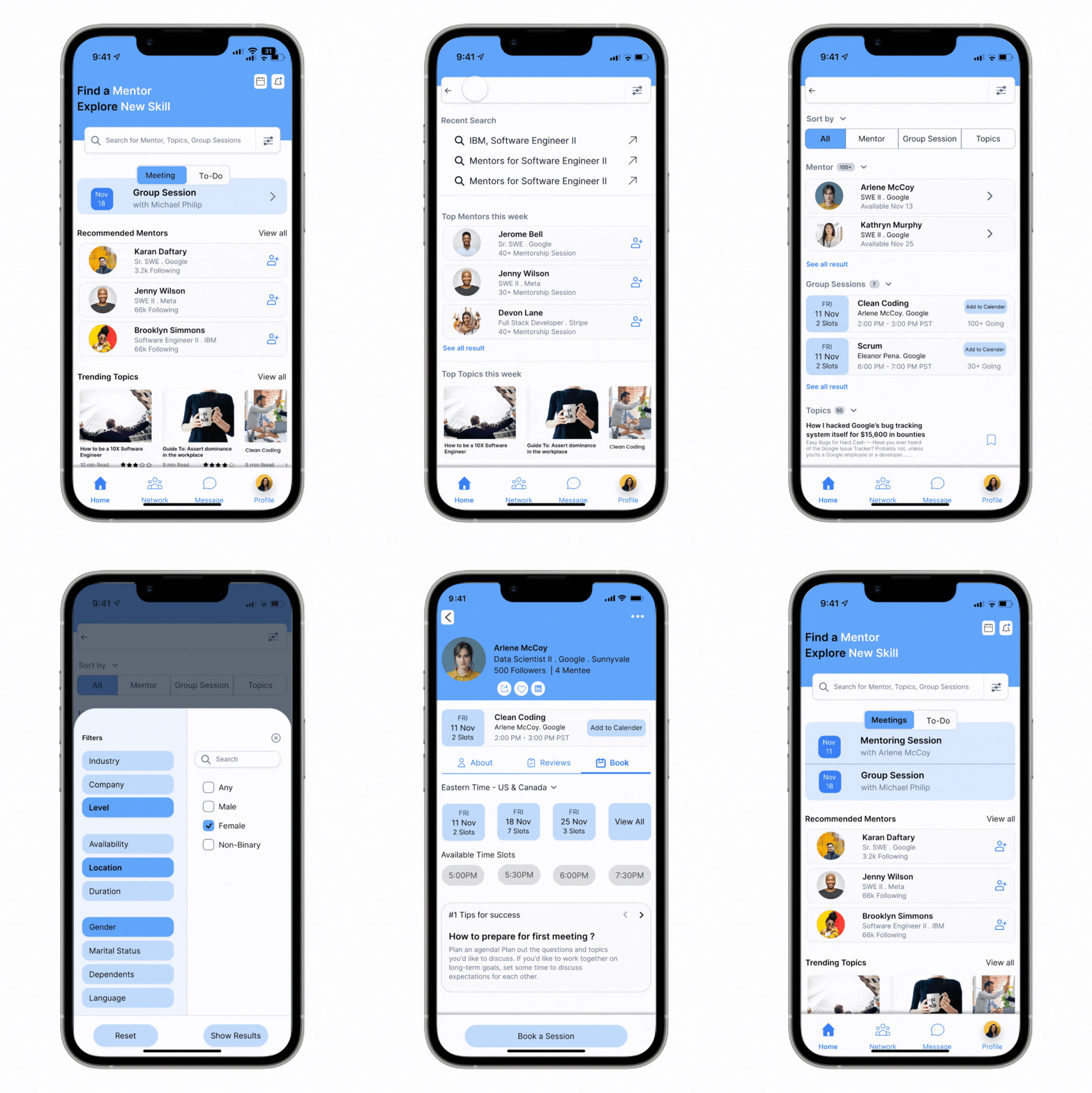
Connect with the "right" mentor
-
Learn from a mentor via multiple mediums
-
Find a mentor in similar life situation as yours
-
Book a session with confidence
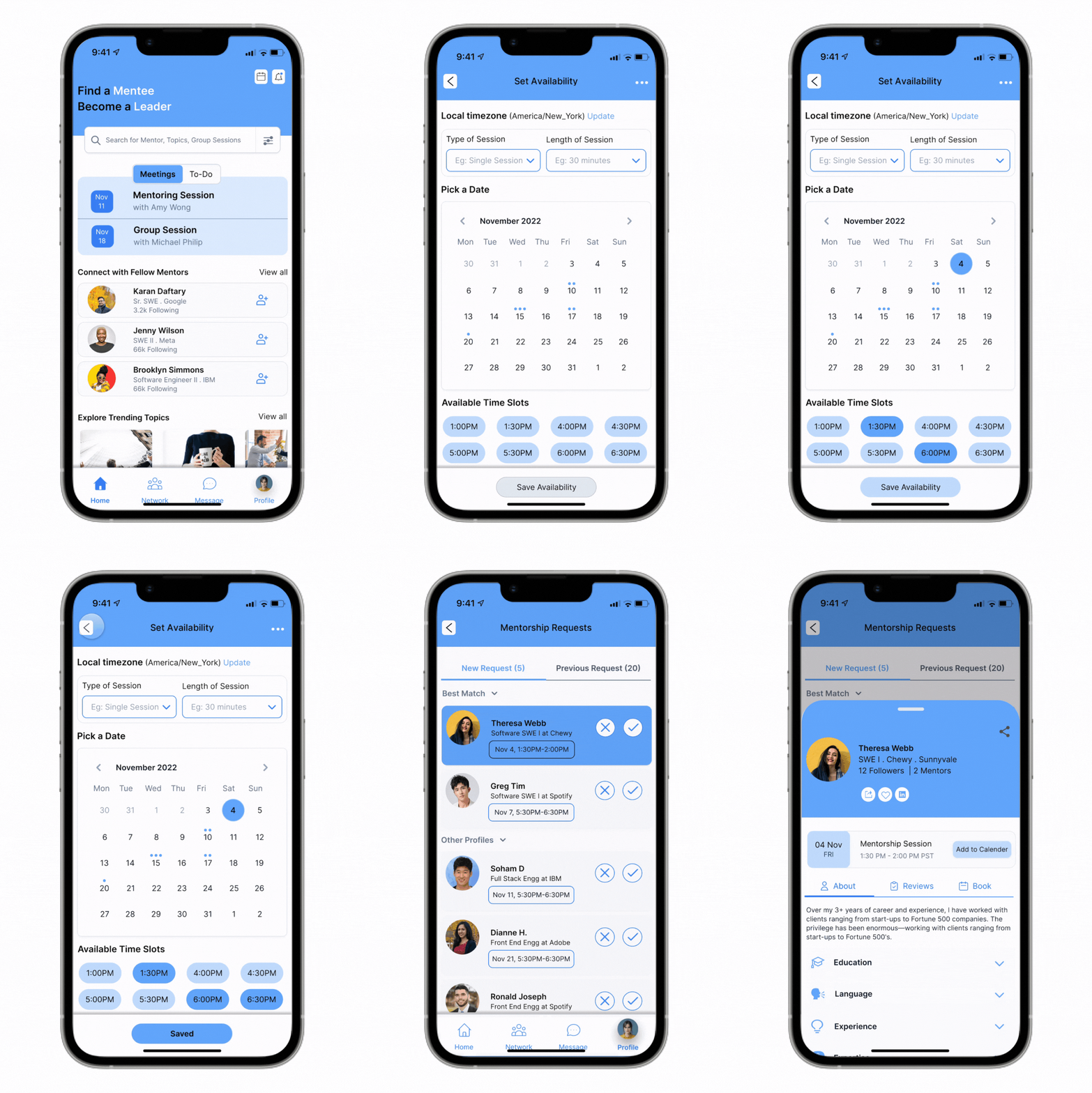
Mentor flexibly, for one or for many
-
Post content that helps lots of mentees
-
Set availability swiftly
-
Pick from curated mentee requests
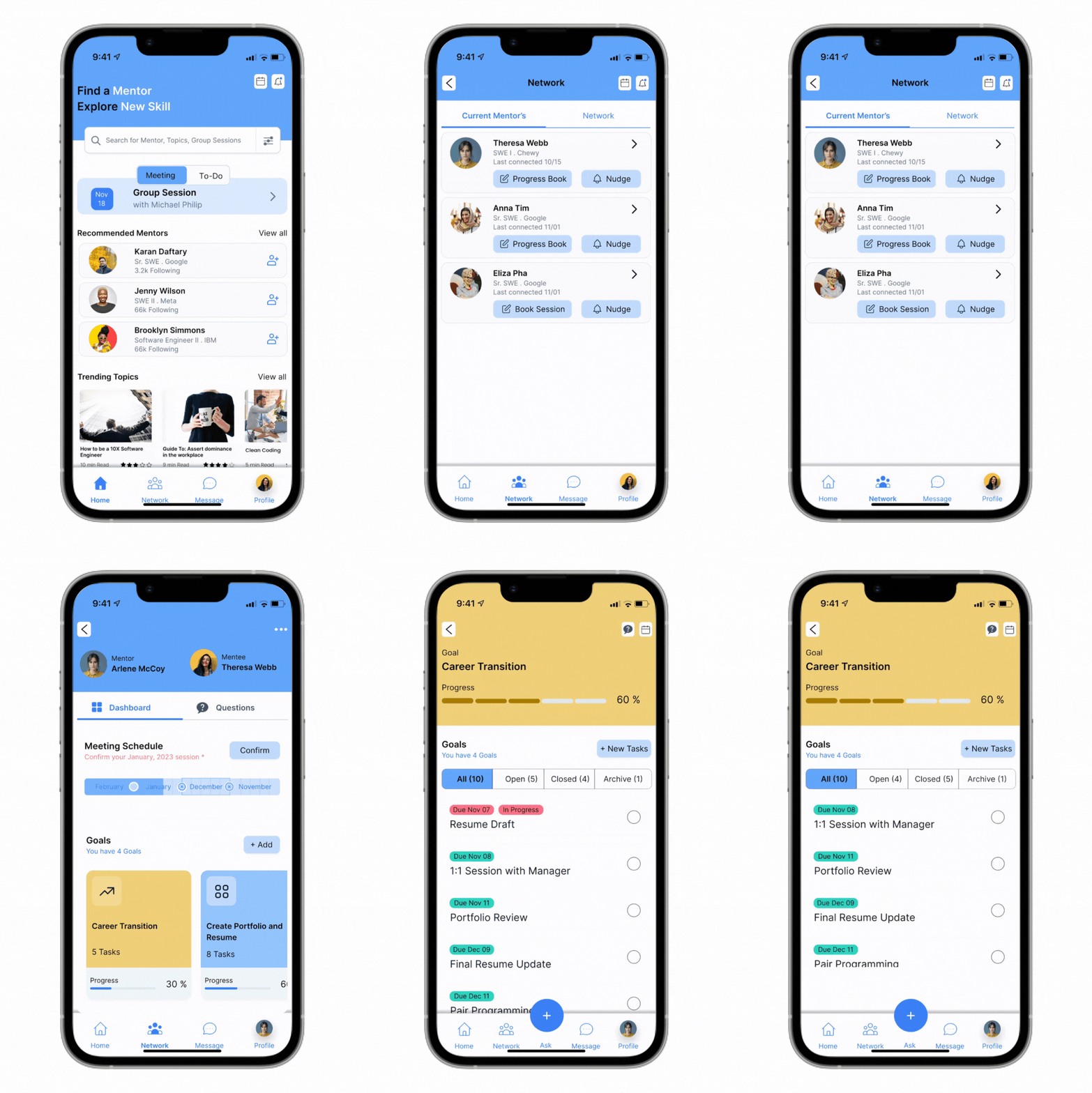
Progress with Accountability
-
Establish timelines with strategic penalties
-
Use goal hierarchies to organize discussions
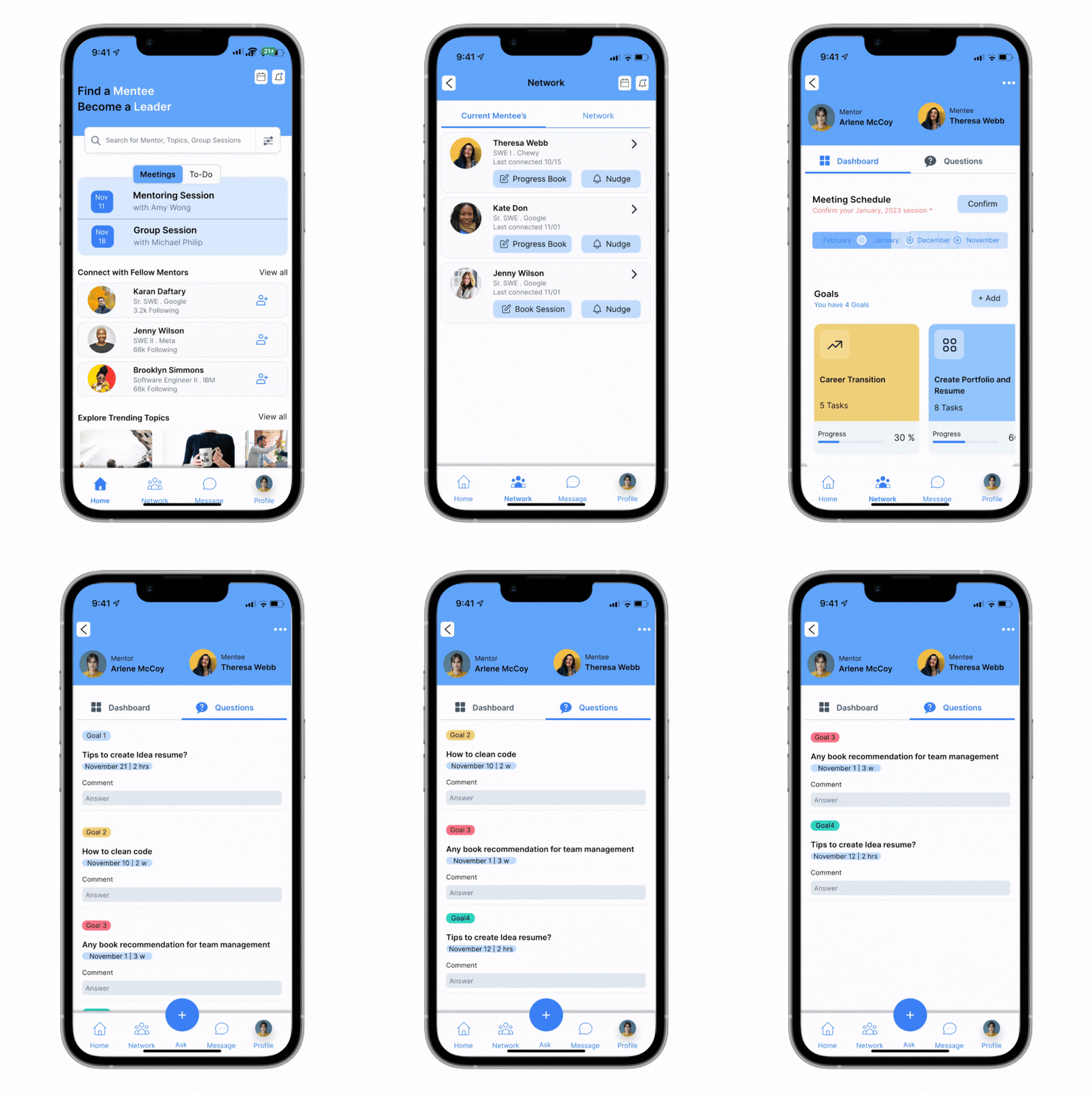
Help when time permits
-
Answer asynchronously at your convenience
-
Schedule questions for next session
STYLE GUIDE

REFLECTION
What I’d do differently next time.
1. Iterate as much as you can: In the beginning stages, I’ve explored so many different options to try finding the right solution for users- I’ve ended up “restarting” my project over 3 times with over 9 iterations of my FIGMA file to make sure every aspect of the app was designed with intention.
2. Be insight- not process-driven: Despite weeks of research + development, my first version of this case study was full of unnecessary text at this stage instead of tying everything into the bigger question- “so how does this fit into the bigger picture”? Hence, I cut down the copy by more than 60% and focused on the major points in my project. Hence, going forward I believe focusing more on the insights will improve my storytelling abilities to others.
3. You didn’t fail- you just found 100 ways that didn’t work: From noticing mistakes in my UI to uncovering more foundational UX problems in my app, I’m thankful to have constantly asked for feedback from my peers and my mentor. In the end, I pushed to have the app as best I could, and did not let my own thinking stop me from questioning if my own decisions were truly best for the user.


bottom of page